
Credit cards charge some of the highest rates you will pay, and if you pay only the minimum, you can carry a balance for years. On a $5,000 balance at 24%, you would need about 19 years to clear it with minimum payments. These guides show you how to cut the interest and clear your balances for good.
Minimum payments keep you in debt
Card interest builds on your balance every day, and the minimum payment covers little more than that interest. Take a $5,000 balance at 24% APR. If you pay a minimum of 1% of the balance plus interest, you need about 19 years to pay it off and pay about $8,887 in interest. At a fixed $200 a month, you finish in 36 months and pay about $2,001.
Four ways to cut the cost
- A payoff plan. Put every extra dollar toward one card at a time, starting with the highest APR or the smallest balance. Our debt payoff strategies guide compares the two methods.
- A 0% balance transfer card. You pay no interest during the introductory period. Most cards charge a transfer fee of 3% to 5%, so plan to pay the full balance before the 0% rate ends.
- A debt consolidation loan. You get one fixed rate and a set payoff date. It saves money when the loan’s APR beats your card rates. To see what you could qualify for, check your rate in our loan marketplace with a soft credit check.
- A call to your card issuer. Ask for a lower APR or a hardship program. A record of on-time payments strengthens your case.
Credit card debt guides
-
Credit Card Debt Solution
-
Crush Credit Card Debt
-
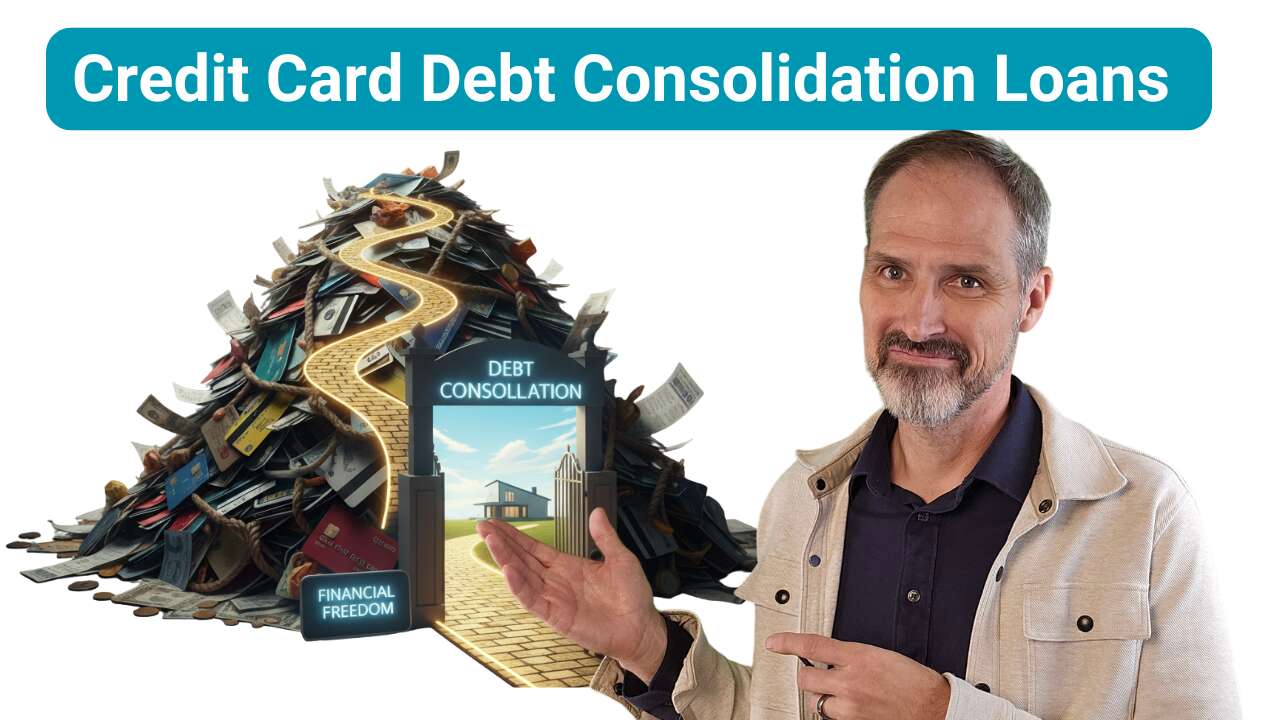
Credit Card Debt Consolidation Loans
-
New Jersey Credit Card Debt
-
Georgia Credit Card Debt Consolidation
-
California Credit Card Debt Consolidation
-
Crush Credit Card Debt
-
Payoff Credit Card Debt Faster
-
Pay Off Credit Card Debt
-
Pay Off Credit Card Debt Fast
-
GET OUT OF CREDIT CARD DEBT! 4 Signs That It’s Time To Consolidate Your Credit Card Debt!
-
Citibank Credit Card Debt Consolidation Personal Loan up to $30,000
Credit card debt FAQs
A balance transfer costs less if you can pay the full balance before the 0% rate ends. A personal loan gives you a fixed rate and a fixed end date, which suits larger balances or a longer payoff.
Keep them open if they carry no annual fee. Closing a card cuts your available credit, which raises your credit utilization and can lower your score.
You can ask your issuer for a lower APR or a hardship plan without hurting your credit. Settling for less than you owe is a different step: it damages your credit and can create a tax bill on the forgiven amount.
Back to the Paying off debt hub or try the debt payoff calculator.
Rates, fees, and terms change. This page is educational and is not personal financial or legal advice. Review a company’s current disclosures before you borrow or enroll.