California Credit Card Debt Is Rising Faster Than the Nation—Here’s How to Take Action
Californians are facing a serious challenge: credit card debt in California has grown 5.1% year-over-year, outpacing the national average increase of 3.4%. With an average credit card balance of just over $7,000—about $350 more than the U.S. average—residents of the Golden State are paying a heavy price in interest. In fact, many Californians lose around $135 every month in interest charges alone, making it harder to pay off balances and build wealth.
The good news? With smart strategies like debt consolidation loans, Californians can potentially cut that interest burden dramatically and speed up their journey to debt freedom.
See if you can get approved.
Why California Credit Card Debt Is Growing Faster
Credit card debt often grows when high living costs meet rising interest rates. California’s expensive housing, fuel, and food costs create pressure that can lead to heavier credit card use. Combine that with today’s average credit card APRs in the 20% range, and it’s clear why balances are climbing faster than the national rate.
Key takeaway: Carrying a $7,000 balance at a 20% APR could cost about $135 a month in interest if you pay only the minimum.
How Debt Consolidation Loans Help Californians Save
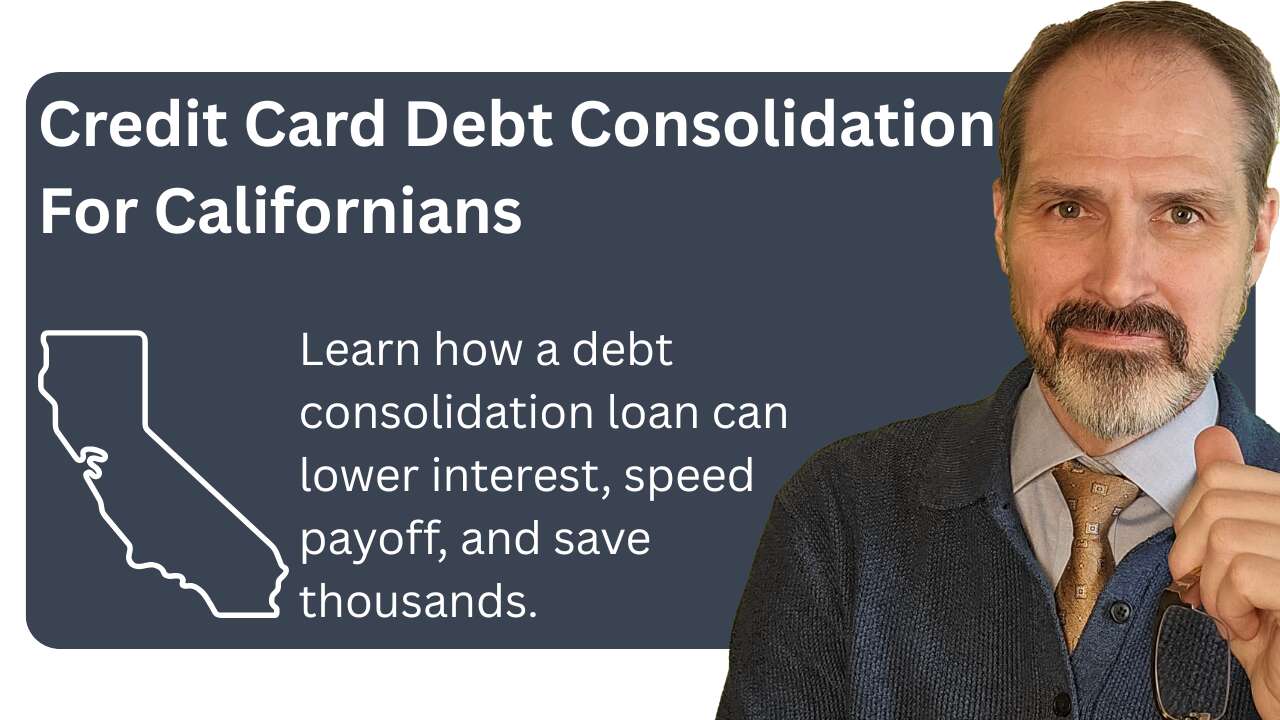
Debt consolidation loans combine multiple high-interest credit cards into one fixed-rate personal loan, often with a lower interest rate and a set payoff date.
Lower Monthly Interest Costs
If you consolidate $7,000 of credit card debt and secure a competitive rate, you might pay only $47 in monthly interest instead of $135. That’s $88 saved every month, which can be redirected toward extra principal payments.
Faster Debt-Free Timeline
By locking in a fixed term—typically three to four years—you’ll know exactly when your debt will be gone. Compare that to the 14–17 years it can take when making only minimum payments on credit cards.
Protection Against Rate Hikes
Credit card APRs can rise with market rates, but a fixed-rate loan shields you from future increases.
Where to Find the Best Debt Consolidation Loans in California
1. Online Lenders
Many top-rated online lenders offer personal loans with soft credit checks (no impact on your score) and quick approval. These platforms can check rates with dozens of lenders at once, helping you find the best match.
Tip: The Yukon Project Marketplace compares rates with up to 40 lenders using just one application.
2. Banks Offering Personal Loans
Some national and regional banks also provide competitive debt consolidation loans. Consider these if you already have accounts or good history with them:
- American Express
- Citi
- Discover
- U.S. Bank
- Wells Fargo
- City National Bank
3. Credit Unions
Credit unions are member-owned and often praised for personalized service. Large options that serve California residents include:
- SchoolsFirst Credit Union
- Golden 1 Credit Union
- America First Credit Union
- Logix Federal Credit Union
- Navy Federal Credit Union
- PenFed Credit Union
While credit unions can be excellent choices, don’t assume their rates are always lower than online lenders or banks. Get multiple quotes.
Steps to Consolidate Credit Card Debt in California
- Check your credit score. Good or excellent credit unlocks the lowest rates.
- Compare multiple lenders. Use marketplaces or apply directly.
- Choose a fixed-rate loan. Ensure monthly payments fit your budget.
- Close or pause old cards if needed. Prevent re-accumulating debt.
- Pay extra toward principal. Accelerate payoff and save on interest.
Detailed FAQ: California Credit Card Debt & Consolidation
Q1: How much credit card debt does the average Californian carry?
A: About $7,000, roughly $350 more than the national average.
Q2: Why is California’s debt growth higher than the U.S. average?
A: High living costs and rising interest rates have fueled a 5.1% year-over-year increase, compared to the national 3.4% rise.
Q3: How much interest could I save with debt consolidation?
A: Cutting monthly interest from $135 to around $47 can save over $1,000 per year.
Q4: Does applying for a debt consolidation loan hurt my credit score?
A: Many lenders (including The Yukon Project marketplace) use soft credit checks to show offers, which don’t affect your credit score.
Q5: How quickly can I become debt-free with a consolidation loan?
A: With a 3–4 year fixed term, you could be debt-free up to a decade sooner than by making minimum credit card payments.
Q6: Are credit unions better than banks for consolidation loans?
A: Not always. While credit unions can be competitive, online lenders and banks often match or beat their rates—especially for borrowers with strong credit.
The Bottom Line
California credit card debt is climbing faster than the national average, but you have tools to fight back. By consolidating high-interest balances into a lower-rate loan, you can slash interest costs, shorten your payoff timeline, and take control of your financial future.