The math, the psychology, and a third option that beats both
One debt payoff strategy can save you up to 85% of the interest you’d pay on your credit card debt. I ran the math, and I’ll show you how it works.
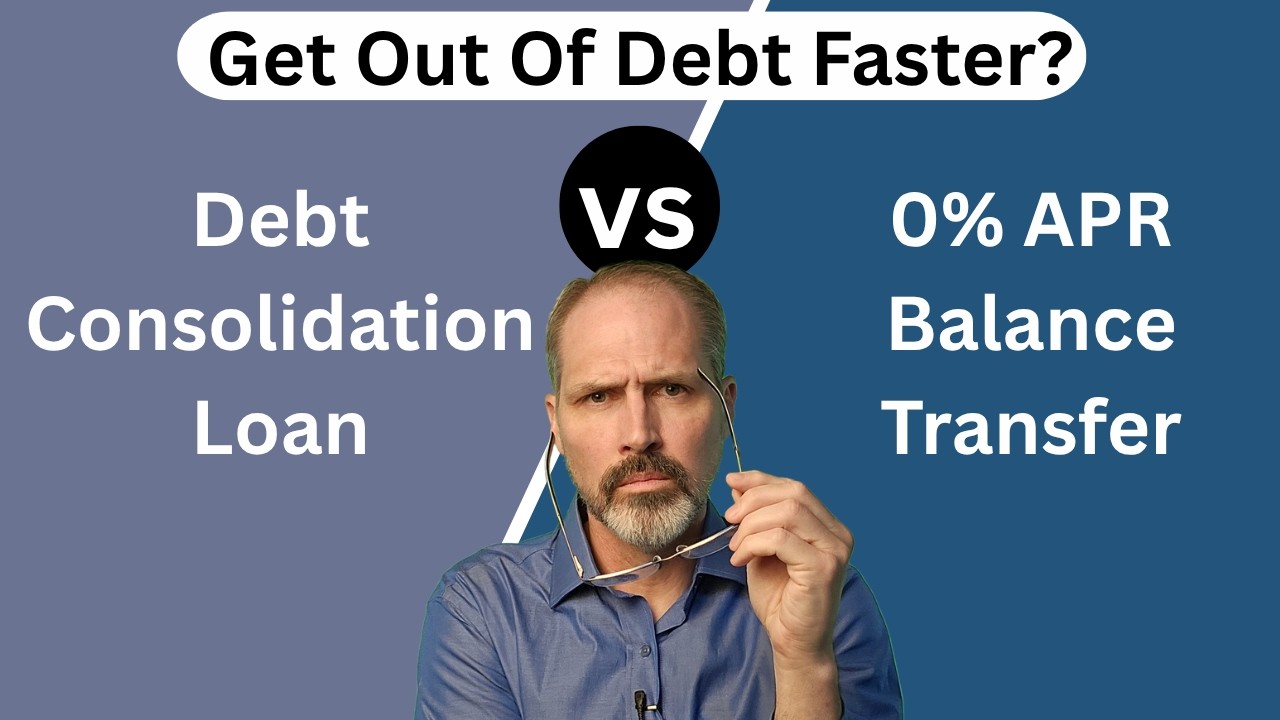
A 0% APR balance transfer card and a debt consolidation loan both promise to get you out of credit card debt. Used the wrong way, either one can keep you in debt longer. Three questions decide which one fits you:
- The math: which option pays off your debt fastest and cheapest?
- Your situation: does anything about your credit or your finances make one option harder, or impossible?
- Your psychology: which plan fits how you behave with money? In my experience, this question decides more payoff plans than the other two.
How a 0% balance transfer can keep you in debt longer
A 0% balance transfer card can keep you in debt longer than doing nothing at all. Zero interest, and it can still slow you down.
Picture your debt spread across three or four credit cards. You move all of it onto one new 0% card. One balance, one payment, and no interest. It feels like progress.
Most credit cards set your minimum payment at the interest you owe plus about 1% of your balance, with a floor around $25 to $30. A 1% principal paydown is so small that it takes years to clear a balance. You speed up once you hit that flat minimum. With your debt spread across several cards, you hit the flat minimum on every card. Combine them into one big balance, and you hit one flat minimum, on a much bigger number. In my calculations, paying the minimums on several cards takes about 21 years. Paying the minimum on one combined card takes about 30.
The 0% period doesn’t save you, either. If you pay only the new minimum, you add about nine years to your payoff. Those extra years cost you back the interest you saved, and you end up paying about the same interest you would have paid on your original cards.
The fix: after you transfer your balances, keep paying what your old minimum payments added up to. Ignore the new, lower minimum. With no interest, every dollar of that payment goes to principal. That one choice separates a balance transfer that traps you from one that frees you.
How a 0% APR balance transfer card works
A 0% APR balance transfer card gives you a promotional window, often 12 to 21 months, when the balance you move accrues no interest. After the window closes, the card’s regular rate kicks in, and it tends to run as high as any other credit card.
Zero interest doesn’t mean zero cost. Most balance transfer cards charge a fee of 3% to 5% of the amount you move. Transfer $10,000, and you might start with a $10,500 balance. Some cards charge an annual fee, too. The fees still cost far less than the interest you’d pay, but they add up.
The card company is betting on three things:
- You’ll add new purchases to the card during the promotion, and those purchases may carry interest.
- You’ll still carry a balance when the promotional rate expires.
- You’ll keep the card open for years. You open cards with ease, and closing them takes effort. My wife and I have two cards we’ve held for more than 20 years.
Knowing those bets tells you how to use the card without falling into the trap.
The allure, and the trap
If you pay only the minimum, about two-thirds of your credit card payment goes to interest. On a $500 minimum payment, that could mean $325 does nothing for your balance.
Move the same balance to a 0% card and keep paying $500. All $500 goes to principal, close to three months of progress in one payment. Keep it up through an 18-month promotion, and you cover more than four years of payoff progress in a year and a half. The power of a balance transfer comes from moving your payment from interest to principal.
Let your payment shrink to the new minimum, and you lose most of that advantage. Treat the 0% offer as a discount on interest, and put the savings toward your balance.
Worked example: a balance transfer vs. paying off the card you have
A viewer asked me this question: should they move $8,000 of credit card debt to a 0% card, or keep it where it is and set autopay to $1,000 a month? Their card charged 22%, and I assumed the worst-case 5% transfer fee and a promotion of at least nine months.
| Stay on the 22% card | Move to a 0% card | |
|---|---|---|
| Starting balance | $8,000 | $8,400 (after a $400 fee) |
| Monthly payment | $1,000 | $1,000 |
| Months to pay off | 9 | 9 |
| Interest and fees | $732 in interest | $400 transfer fee |
My answer: do both. Make the transfer, and set the new card to autopay $1,000 a month. You’d be out of debt in the same nine months and keep about $332. If you can pay your debt off within a year at your current payment, a balance transfer still saves you money, as long as the promotion outlasts your payoff.
Weigh two more things before you apply. A new card can drop your credit score 10 to 20 points at first, depending on your credit. Decide ahead of time how you’ll use the old card and the new one, and look at the double autopay method before you choose. Once you’ve paid off the new card and the promotion ends, you can close it.
Who should use a 0% balance transfer card
You’ll need a solid credit score to get approved, and a couple of recent late payments can get you denied even if your score looks fine. Start by finding out what you can qualify for.
Once you qualify, you need discipline in two places:
- No new charges on the new card or on the cards you paid off with the transfer.
- No shrinking payment. Keep paying your old, higher amount instead of drifting down to the new minimum.
If either one feels like a stretch, a balance transfer card becomes a revolving door instead of an exit. Skip it, and look at a consolidation loan.
Why a debt consolidation loan can win
Nothing beats 0% interest. A personal loan can still get you out of debt faster, because of its structure.
A debt consolidation loan gives you a fixed interest rate, a fixed monthly payment, and a fixed payoff date. From day one, you know the month your debt will be gone. You can’t add new charges, because a personal loan is a closed installment loan, paid down in equal payments until it hits zero. Each payment puts more toward principal than the one before it. Extra payments shorten the term without changing the monthly amount.
I’m a big advocate of autopay for your bills: you never pay a late fee or miss a payment, and your credit score benefits. Autopay on a credit card minimum can lull you, though. The bill gets paid, nothing bounces, and you feel like you’re handling it. Paying the minimum can take more than 20 years, even if you never charge another dollar. A consolidation loan on autopay keeps you marching toward a payoff date.
That structure helps two kinds of people. It helps you if juggling balances, shifting minimums, and the temptation to spend trip you up. It also helps you if you’re disciplined but don’t want to think about your debt every month. Both are good reasons to choose a loan over a balance transfer.
Side-by-side comparison
| 0% balance transfer | Debt consolidation loan | |
|---|---|---|
| Type of debt | Revolving | Fixed installment |
| Interest rate | 0% during the promotion, then variable | Fixed for the life of the loan |
| Payment | Shrinks with your balance if you let it | Fixed |
| Payoff date | Depends on your discipline | Set when you sign |
| Upfront cost | Balance transfer fee, often 3% to 5% | Origination fee on some loans |
If you know you’ll keep your payment high and avoid new charges, a balance transfer can save you more in total interest. If you want certainty and structure without managing it each month, a consolidation loan does that job for you.
The third option: use both
You can combine the strengths of both. Open a 0% balance transfer card, and during the promotion, pay what your old minimums added up to. Right before the promotional rate expires, roll the remaining balance into a fixed-rate debt consolidation loan.
In my calculations, that combination saves you about 85% of the interest you’d pay by carrying the debt on your original cards and paying the minimums. If you would have paid $10,000 in interest, you’d pay about $1,500. You’d also pay off the debt in less than five years instead of 21. It takes more attention to manage, but for the right person, it captures the best of both.
Where to check your options
Rates and terms vary a lot from one lender to the next, so shop around before you choose.
- Balance transfer cards: our credit card finder shows which cards offer balance transfer promotions, how long each promotion lasts, and the APR after it ends.
- Consolidation loans: on our lending marketplace, choose debt consolidation as your loan purpose, then enter the amount you need and your credit score range. Apply with one of our featured lenders, and we’ll check your rate with up to 40 lenders behind the scenes. Our partners use a soft credit check, so applying won’t hurt your credit score.
Using our tools helps us out. Your goal is the best deal for your math, your situation, and your psychology, even if you find it somewhere else.
Final thoughts
You get out of debt faster by putting more of each payment toward principal and less toward interest. A 0% balance transfer can do that if you keep your payment high and keep new charges off the card. A debt consolidation loan does it with a fixed payment and a fixed finish line.
Neither one fixes the habits or the situation that got you into debt. Pair your strategy with a plan to stop adding new balances: close accounts, build an emergency fund, track your spending, or find an accountability partner. For more on choosing a loan, read our guide on how to consolidate credit card debt.