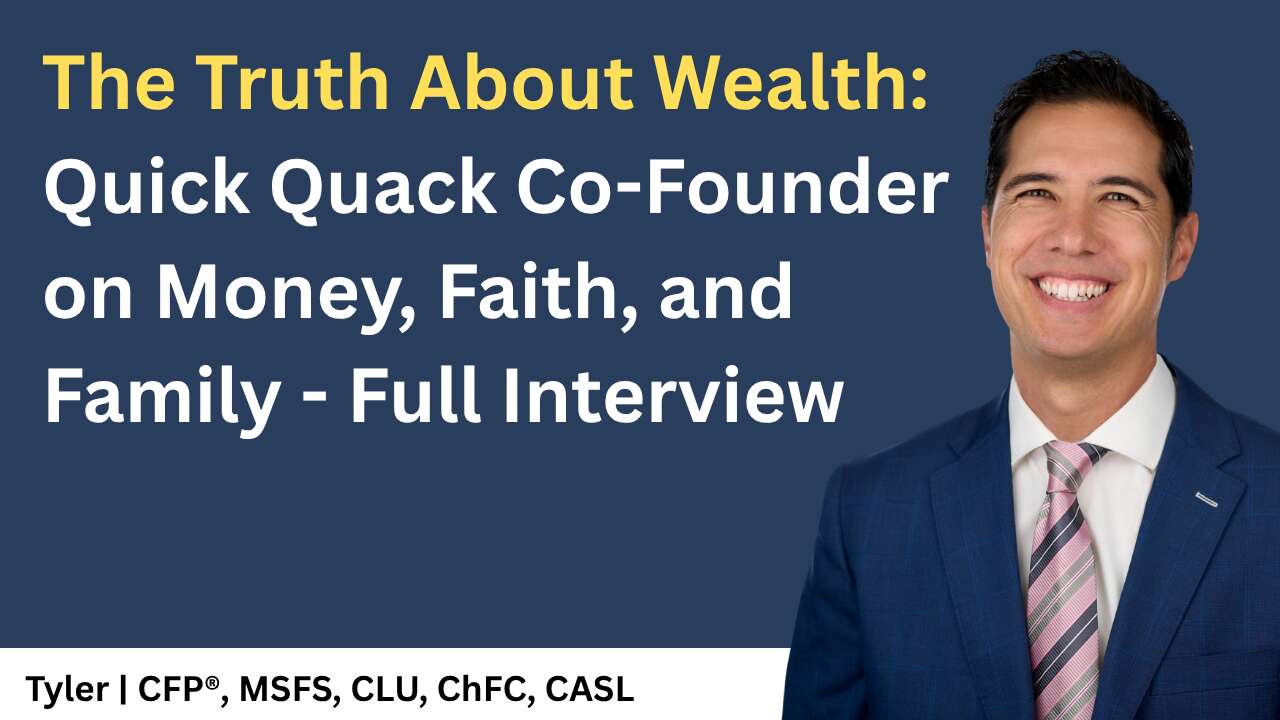
The Life, Wealth, and Legacy of Tim Wright: How Money, Struggle, and Purpose Shape Long-Term Happiness
Wealth means different things to different people—but for Tim Wright, co-founder and chairman of Quick Quack Car Wash, wealth is deeply tied to service, family, faith, and generational impact. In this long-form article, we explore how Tim’s childhood shaped his money mindset, how his entrepreneurial journey began, why he believes struggle is essential for success, and how faith and purpose guide his decisions today.
This article is based on a full-length interview with Tim Wright and is optimized for readers searching for wealth mindset, generational wealth, money and happiness, entrepreneurship, financial literacy for families, and purpose-driven success.
Early Life: Growing Up the Youngest of Seven in a Financially Stretched Home
Tim Wright was born in San Antonio, Texas—the youngest of seven children in a family that often struggled financially. Although his father worked hard in retail management and later held executive roles, money was consistently tight.
Despite financial stress, Tim remembers his father as intensely dedicated to work and deeply committed to church service. Responsibilities in the LDS Church sent him across Texas for frequent travel, leaving little time at home.
How Childhood Money Stress Shapes Adult Money Mindsets
Growing up with scarcity left a permanent impression on Tim.
He saw, firsthand, the limitations of “working for the man” and living paycheck to paycheck.
“I wanted to be like my father, but not on the shortage of money.”
This became a core motivator—one that shaped his educational path, his marriage, and eventually his entrepreneurial journey.
Family Dynamics: Love, Imperfection, and the Seeds of Determination
Tim describes his mother as an “angel mother”—gentle, patient, and steady—even as she endured decades of financial strain and the emotional weight of raising seven children mostly alone.
He also shares candidly about his father’s struggle with anger.
These difficult moments, though painful, shaped Tim’s determination:
- to build a different family culture
- to create financial safety
- to break generational patterns
- and to become the kind of father he wanted to be
Instead of rejecting his upbringing, he used it as a blueprint for what he wanted to change.
How Tim Discovered the Power of Leverage—Before Entrepreneurship
After graduating from BYU with a degree in international relations, Tim fell into real estate appraisal almost by accident. His father-in-law suggested he “just take a community college class” to explore it.
That single decision changed the course of Tim’s entire life.
Fee Split = First Taste of Income Leverage
Real estate appraising paid on a fee-split basis, meaning the faster and smarter he worked, the more he earned.
This is where Tim learned the difference between:
- trading time for money
- and leveraging skills for income
Using Early Technology to Multiply Income
When the first portable Compaq computers and early spreadsheets arrived, Tim saw opportunity.
While others hesitated, he adopted technology, streamlined processes, and produced more appraisals per day than his peers.
This led to:
- higher income
- a leadership and training role
- and eventually a partnership opportunity
It was Tim’s first real lesson in strategic leverage—a concept that would later define his entrepreneurial success.
Pivot Into Entrepreneurship: Syndications, Storage Units, and Investor Partnerships
After several years in appraisal, Tim moved into real estate syndication, a field where he sourced deals, structured investor partnerships, and oversaw management. His valuation background gave him a deep advantage.
What Made His Investment Approach Different?
Tim followed one core principle:
“Investors get paid first. We don’t deserve a dime unless they are made whole.”
This framework built:
- trust
- loyalty
- and long-term investor relationships
One investor later visited Tim’s home to say:
“The way you treated us made it possible for us to retire.”
This became one of Tim’s proudest professional moments.
Building Generational Wealth by Teaching Financial Literacy Early
Tim and his wife raised four children with a simple but powerful money framework:
The Wright Family Financial Principles
- Pay tithing first
- Save 10%
- Spend the remainder intentionally
- Avoid consumption for consumption’s sake
- Make informed investment decisions
- Use spreadsheets and tracking tools early
As the kids grew, Tim shared real family financial decisions—successes and failures—so they could see how money works in real life.
He even created a grandchild investment spreadsheet, where he matches their contributions and gives them a fictional 20% return—purely for education.
This hands-on teaching model produced financially fluent adults who now teach the same principles to their children.
Why Struggle Matters More Than Success: Tim’s Framework for Growth
A central theme in Tim’s philosophy is the value of struggle, not failure.
“Struggle builds strength. It refines you.”
This belief guided how he parented, invested, and advised his children.
Case Study: His Daughter-in-Law’s 10-Year Dream
While living in Spain, Tim’s daughter-in-law dreamed of owning an Airbnb in a historic walled city on the Mediterranean coast. Tim could have simply bought it for her—but he refused.
He wanted her to experience the struggle.
After 10 years of saving, learning, planning, and facing obstacle after obstacle, she finally made it happen. The property is now fully booked and self-sustaining.
This achievement, Tim believes, was only meaningful because of the struggle it required.
The Role of Faith: Purpose, Identity, and the Tabernacle Choir
Faith is a central pillar in Tim’s life.
One of his greatest non-monetary goals was singing in the Tabernacle Choir—a dream that guided major life decisions, including moving to Utah at the right time.
His life planner spreadsheet even included:
- financial goals
- spiritual goals
- legacy goals
- artistic and personal development goals
Tim’s philosophy:
True wealth is a combination of financial freedom, personal purpose, and spiritual alignment.
A Life-Changing Diagnosis: Cancer and the Redefinition of Success
About a year and a half ago, Tim was diagnosed with cancer.
This forced him to step back from the career he loved—even during its most successful phase.
He admits this has been one of the hardest transitions of his life.
Letting Go of Control
As a lifelong entrepreneur used to driving outcomes, stepping back felt unnatural.
But Tim now sees his diagnosis through a spiritual lens:
“God has plans for us, and we adapt to God’s plan, not our plan.”
The diagnosis reframed his definition of success—not as hitting every goal on the spreadsheet, but living aligned with faith, relationships, and purpose.
Tim Wright’s Legacy: What Wealth Really Means
Tim’s story is not about becoming wealthy.
It’s about:
- breaking generational financial patterns
- building financial literacy in children and grandchildren
- leveraging skills to create opportunity
- using goals to shape daily habits
- balancing ambition with faith
- understanding when struggle is necessary
- and knowing when to step back
His message is simple:
Wealth creates options—but struggle creates character.
Success is meaningful, but purpose is essential.
Conclusion: A Blueprint for Purpose-Driven Wealth
Tim Wright’s journey—from a financially stressed childhood to entrepreneurial success to navigating cancer—illustrates a powerful truth:
Wealth is not the end goal.
The real goal is a life built with intention.
His story offers a blueprint for anyone who wants to build:
- a healthier money mindset
- generational financial literacy
- purpose-driven entrepreneurship
- and a balanced, meaningful life
If you value wealth with purpose, Tim’s experience provides the clarity, honesty, and inspiration needed to pursue long-term, sustainable happiness.
#TimWright, #QuickQuack, #QuickQuackCarWash, #WealthAndHappiness, #MoneyMindset, #FaithAndFinances, #EntrepreneurStory, #RealEstateInvesting, #SelfStorageInvesting, #GenerationalWealth, #FinancialLiteracy, #FamilyFinance, #LifePlanning, #GoalSetting, #MoneyAndMeaning, #LDSBusiness, #TabernacleChoir, #RetirementPlanning, #TeachKidsMoney, #WealthWithPurpose, #StruggleAndSuccess, #CancerPerspective, #purposedrivenwealth ———————————————————————————————————————————————————- Tyler J Vongsawad CFP®, MSFS, CLU, ChFC, CASL Wealth Management Advisor Founding Partner at Happier Wealth CA Insurance License #0E78493. Securities and advisory services offered through LPL Financial, a registered investment advisor, Member FINRA/SIPC. The information contained in this e-mail message is being transmitted to and is intended for the use of only the individual(s) to whom it is addressed. If the reader of this message is not the intended recipient, you are hereby advised that any dissemination, distribution or copying of this message is strictly prohibited. If you have received this message in error, please immediately delete it. Certified Financial Planner Board of Standards Inc. owns the certification marks CFP®, CERTIFIED FINANCIAL PLANNER™ and federally registered CFP® (with flame design) in the U.S., which it awards to individuals who successfully complete CFP Board’s initial and ongoing certification requirements. The Chartered Advisor for Senior Living (CASL®) designation is conferred by The American College of Financial Services.